In this guide · 7 practical sections
Start with the finished garment
Approve fabric against the intended product, not only its fibre name or weight. Record composition, construction, finished GSM, usable width, face and back, stretch direction, recovery, colour, care and finish. Ask for the same data on bulk fabric.
Compare construction, end use and risk
| Construction | How it is built | Common use | Before bulk |
|---|---|---|---|
| Single jersey | Knitted; distinguish face and reverse | T-shirts and light tops | Opacity on pale colours, seam twist after wash, neck recovery. |
| Interlock | Double knit; smooth faces | Structured T-shirts and soft sets | Weight versus drape, drying, shrinkage and recovery. |
| Rib | Alternating knit and purl columns | Neckbands, cuffs and fitted tops | Check stretch, recovery and shade against the body fabric. |
| Piqué | Textured knit, often used in polos | Polos and textured tops | Check collar match, print detail and dimensional change. |
| French terry | Flat face and unbrushed looped back | Sweatshirts, joggers and shorts | Loop snagging, shrinkage, shade matching and rib recovery. |
| Brushed sweatshirt fleece | Raised back; distinguish it from pile fleece | Hoodies and warm joggers | Pilling, lint, shade and seam bulk. |
| Waffle / thermal knit | Recessed and raised cells | Thermal tops and textured sets | Growth, snagging and dimensional stability after laundering. |
| Warp-knit tricot | Warp knit; evaluate stretch by direction | Activewear, swim and linings | Stretch and recovery, opacity on stretch, seam and exposure tests. |
| Poplin / plain weave | Simple interlacing, often crisp | Shirts and light woven pieces | Transparency, seam slippage, shrinkage and wrinkle appearance. |
| Oxford | Basket-type woven texture | Casual shirts and overshirts | Check weave scale, stiffness and decoration detail. |
| Twill / gabardine | Diagonal weave; weight and density vary | Trousers and utility pieces | Seam strength, abrasion, crease appearance and shrinkage. |
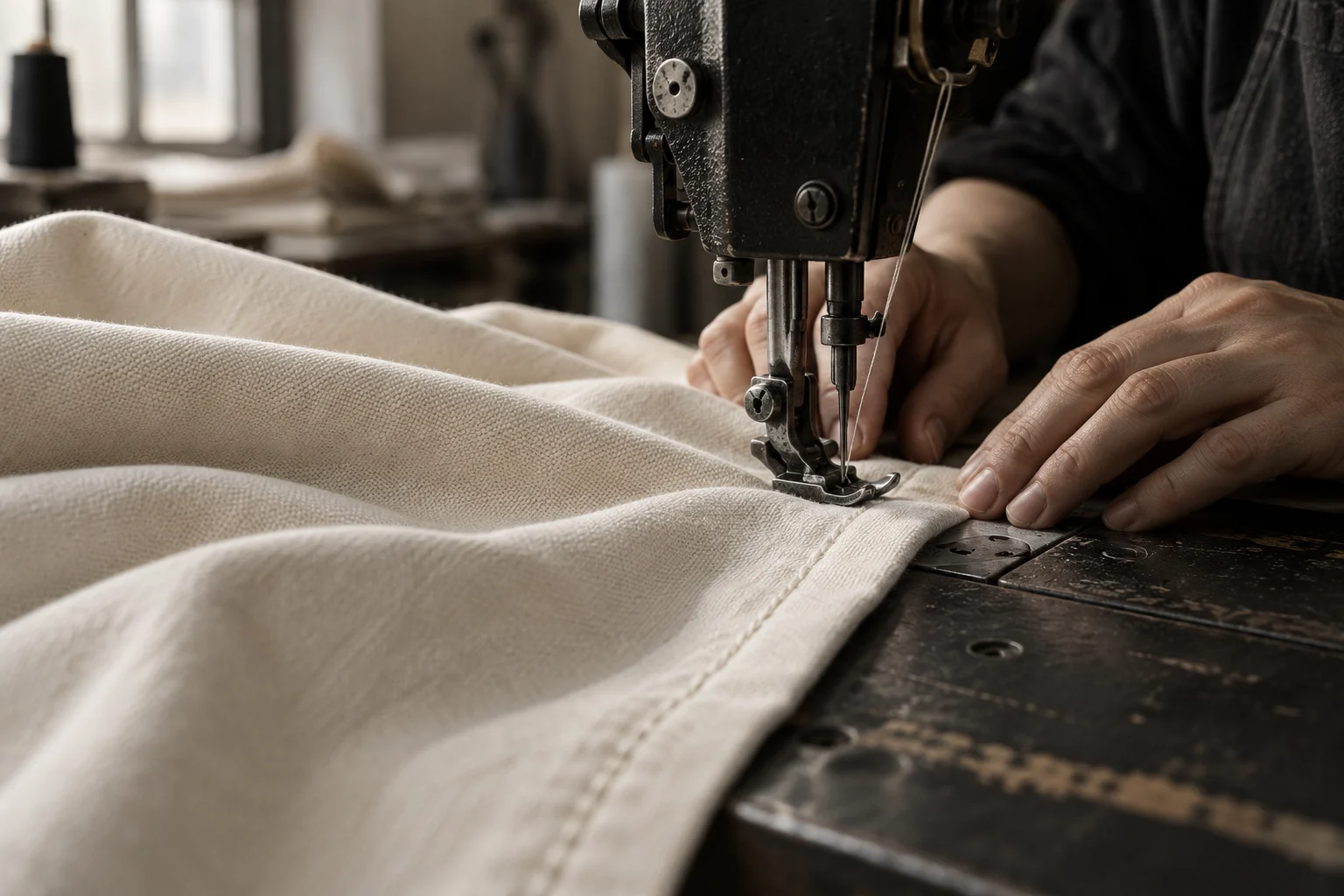
| Canvas / duck | Firm plain weave | Utility clothing and bags | Weight, seam bulk, abrasion and edge finish. |
| Voile / chiffon | Light woven qualities with different handle and transparency | Layered dresses and overlays | Assess opacity with lining; check snagging and seam slippage. |
| Ripstop | Reinforced woven grid | Technical shells and utility pieces | Tear performance, coating and seam construction; do not infer waterproofing from the grid. |
| Bonded / laminated fabric | Multiple layers joined together | Structured outerwear and shells | After-care delamination, peel or bond strength, seam performance and handle. |
A fabric brief a mill can quote
Example: oversized tee in combed cotton single jersey, target finished weight 240 GSM, usable width to be confirmed, compact hand, washed charcoal. Quote stock and custom shade separately. Request dimensional change and twist results after the agreed care cycle; check neckband recovery on the sewn sample.
GSM alone does not tell you opacity, pilling, stretch or drape. For each choice, confirm the fabric route, lot minimum, shrinkage and a bulk sample from the correct lot.
Related guides and tools
Technical references
Detailed fabric and production guides
Make the next buying decision
Questions, answered
Is 240 GSM enough for a premium oversized T-shirt?
240 GSM describes mass per area. Compare yarn, knit construction, opacity, drape, neckband recovery and after-wash twist on a sewn garment before approving the fabric.
What is the difference between French terry and brushed fleece?
French terry has unbrushed loops on the back. Brushed sweatshirt fleece has a raised back. Compare warmth, seam bulk, lint and pilling for the intended garment.
Should a startup use stock or custom fabric?
Start with stock when the fabric and shade meet the brief and repeat availability is acceptable. Request a separate custom quote when the shade, construction or finish is essential; compare lot cost and lead time.